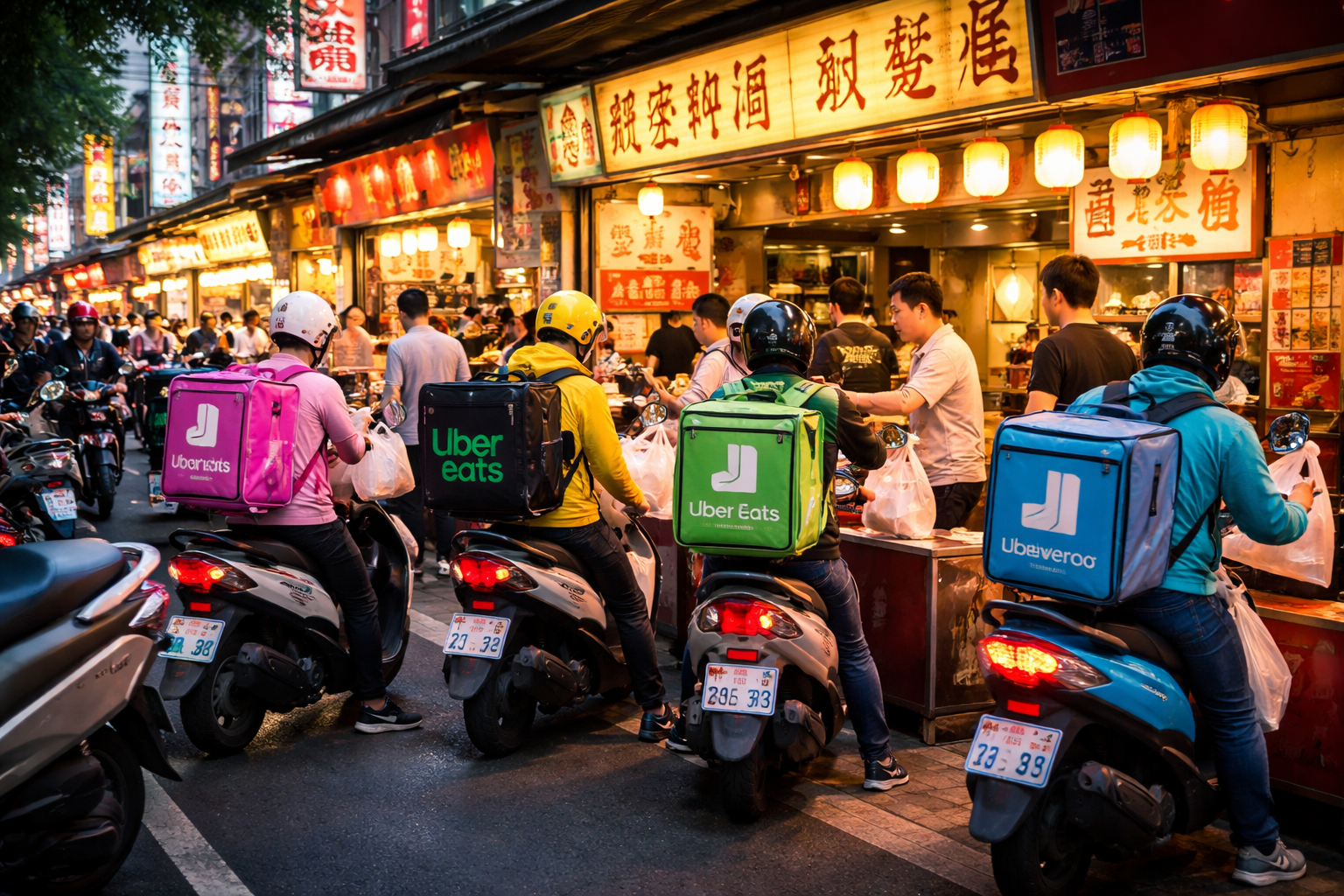
As more SME-focused delivery apps get built, one question becomes hard to ignore: how do we keep delivery affordable without weakening the driver model that keeps the whole system running?
That matters because “cheap delivery” often looks attractive at the surface, but somewhere in the chain, someone absorbs the cost. Too often, that ends up being the driver, through lower earnings, unstable incentives, weaker protection, or unrealistic service expectations.
The real challenge is not just reducing driver cost. It is designing a model where efficiency comes from smarter operations, without losing service quality, driver reliability, or basic protections such as accident insurance.
So what should we really be asking?
First, are driver costs actually too high, or are we simply paying for inefficiency? A big part of delivery cost can come from poor order batching, long pickup wait times, low route density, and badly timed dispatch. In that case, the issue is not the driver. It is the operating model.
Second, what should drivers really be paid for? Only completed drops? Or also waiting time, difficult zones, peak traffic, and service consistency? If we want better driver reliability, we may need to think beyond a pure per-drop model.
Third, are incentives solving the problem, or just hiding it? Many platforms use incentives to patch weak supply or poor planning. That may work in bursts, but it does not always create a stable driver base.
This is where AI could become far more useful than most people think.
AI can help consolidate nearby orders more intelligently, predict demand by zone and time, and match driver assignment more closely to when orders are actually ready. That sounds simple, but it can reduce idle time, improve route density, and make delivery flow more efficient from order placement to pickup to final drop.
AI could also help platforms offer customers a choice. Not every order needs to arrive at maximum speed. Some customers may accept a slightly delayed order if they receive a lower fee or some small benefit in return. That gives the platform more room to combine orders in the same area, improve utilization, and control cost without hurting the driver.
It can also support better driver management. Instead of using blunt incentives, platforms could use AI to understand driver patterns, preferred areas, consistency, and availability. That may allow incentives to reward reliability, safety, and quality, not just raw volume.
And one thing should not be negotiable: driver protection. If a business depends on drivers, accident insurance cannot sit outside the model as an afterthought. It has to be built into the economics from the start.
The future of cost-effective SME delivery may not come from paying drivers less. It may come from building a smarter system, one that uses AI to improve batching, dispatch, timing, customer flexibility, and driver support all at once.
Because cheap delivery is never really free. The real question is whether cost efficiency comes from better design, or from quietly pushing the pressure onto the people keeping the wheels moving.