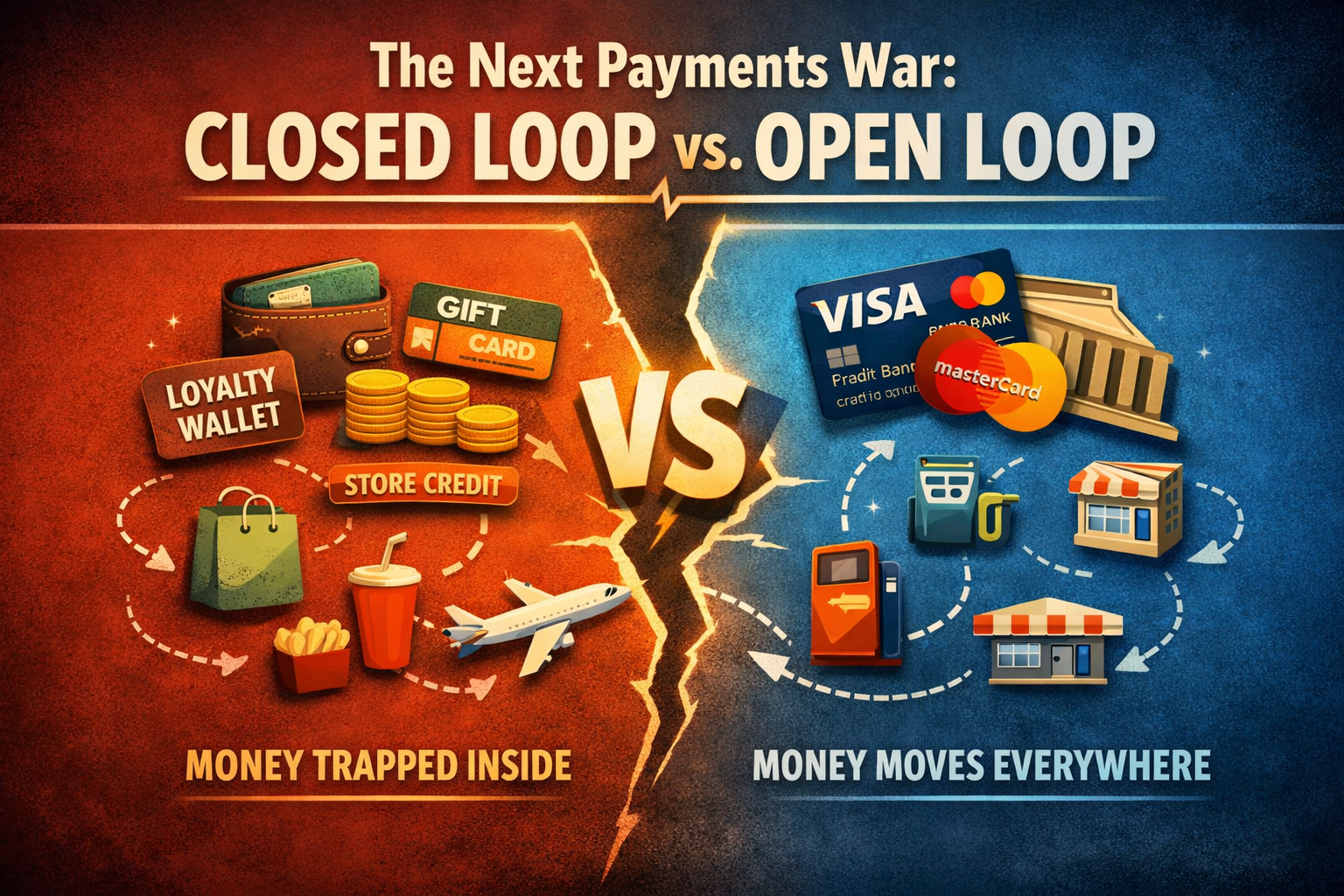
For years, we’ve heard about a battle between payment methods cards, digital wallets, bank transfers. But I believe this misses a deeper, quieter shift. It’s not about how you pay at the checkout.
It’s about where your money lives before you even get there.
Your Money in Walled Gardens
Most of us are used to open-loop money: your debit card, credit card, or bank account. These work almost anywhere.
But there’s another kind: closed-loop money. This is value that lives inside a specific app or store.
Think:
- Your Amazon gift card balance
- Starbucks rewards stars
- Uber Cash
- Store credit from a return
- Credits in a gaming app
This isn’t new. What is new is how big and strategic these “walled gardens” have become. Companies are designing experiences so you keep money inside their world.
Why Companies Love “Stored Value”
From a business perspective, it makes sense. If you already have a balance in their app, you’re more likely to return. It costs them less in fees, and they learn more about your habits.
For you, it can mean more perks, smoother checkouts, and tailored rewards.
The Unseen Consequence
Here’s what often goes unnoticed: when you pay with a gift card balance or loyalty points, no “traditional” payment happens. Your credit card network doesn’t see that transaction, even though a sale occurred.
The real competition is shifting—from the moment you tap your phone, to the moment you load money into an app.
The Path Forward: Connection, Not Just Competition
This isn’t a winner-takes-all fight. The future isn’t closed-loop or open-loop—it’s both.
The opportunity lies in connecting these systems. Imagine seamlessly using rewards points across different stores, or moving value between apps as easily as sending a text. The infrastructure behind your credit card is perfect for enabling this.
What This Means for Us
The next decade in payments will be defined by how these two models work together. The businesses that succeed will be those that blend the convenience of stored value with the flexibility of your traditional cards.
They’ll design experiences that feel simple for you, while being smart about where your money resides.
That’s the real shift happening right under our fingertips. It’s not just about how you pay. It’s about where your money calls home.