
Author: Vibhore Uprety

  • Who Really Pays for Cheap Delivery? Rethinking Driver Cost in SME Delivery Apps

    Who Really Pays for Cheap Delivery? Rethinking Driver Cost in SME Delivery Apps

    As more SME-focused delivery apps get built, one question becomes hard to ignore: how do we keep delivery affordable without weakening the driver model that keeps the whole system running?

    That matters because “cheap delivery” often looks attractive at the surface, but somewhere in the chain, someone absorbs the cost. Too often, that ends up being the driver, through lower earnings, unstable incentives, weaker protection, or unrealistic service expectations.

    The real challenge is not just reducing driver cost. It is designing a model where efficiency comes from smarter operations, without losing service quality, driver reliability, or basic protections such as accident insurance.

    So what should we really be asking?

    First, are driver costs actually too high, or are we simply paying for inefficiency? A big part of delivery cost can come from poor order batching, long pickup wait times, low route density, and badly timed dispatch. In that case, the issue is not the driver. It is the operating model.

    Second, what should drivers really be paid for? Only completed drops? Or also waiting time, difficult zones, peak traffic, and service consistency? If we want better driver reliability, we may need to think beyond a pure per-drop model.

    Third, are incentives solving the problem, or just hiding it? Many platforms use incentives to patch weak supply or poor planning. That may work in bursts, but it does not always create a stable driver base.

    This is where AI could become far more useful than most people think.

    AI can help consolidate nearby orders more intelligently, predict demand by zone and time, and match driver assignment more closely to when orders are actually ready. That sounds simple, but it can reduce idle time, improve route density, and make delivery flow more efficient from order placement to pickup to final drop.

    AI could also help platforms offer customers a choice. Not every order needs to arrive at maximum speed. Some customers may accept a slightly delayed order if they receive a lower fee or some small benefit in return. That gives the platform more room to combine orders in the same area, improve utilization, and control cost without hurting the driver.

    It can also support better driver management. Instead of using blunt incentives, platforms could use AI to understand driver patterns, preferred areas, consistency, and availability. That may allow incentives to reward reliability, safety, and quality, not just raw volume.

    And one thing should not be negotiable: driver protection. If a business depends on drivers, accident insurance cannot sit outside the model as an afterthought. It has to be built into the economics from the start.

    The future of cost-effective SME delivery may not come from paying drivers less. It may come from building a smarter system, one that uses AI to improve batching, dispatch, timing, customer flexibility, and driver support all at once.

    Because cheap delivery is never really free. The real question is whether cost efficiency comes from better design, or from quietly pushing the pressure onto the people keeping the wheels moving.

  • Taiwan Payments Market: Opportunities for Wallets and Banks

    Taiwan Payments Market: Opportunities for Wallets and Banks

    Taiwan’s payments market is already digital. The next phase of growth will not come from adding more QR codes or more wallet users. It will come from deepening revenue per user, per merchant, and per banking relationship. Official data shows Taiwan had 38.69 million electronic payment accounts as of January 2026, so scale is already there. The real question now is who monetises that scale better.

    LINE Pay is especially well positioned because its strength is no longer just payment. It had 13.6 million users as of November 2025, and its own materials show it is building beyond transactions into points, financial partnerships, vouchers, advertising, and merchant marketing tools. That makes it more than a wallet. It is increasingly a consumer engagement and merchant growth platform.

    JKO Pay has a different advantage. Its strength appears to be deep everyday acceptance, with over 5.9 million users and more than 250,000 merchants cited in recent partner documentation. That kind of offline density creates room for higher-value services: merchant CRM, neighbourhood offers, SME loyalty, embedded lending partnerships, and simple subscription-style merchant tools.

    https://media.qrtiger.com/blog/2025/07/scanning-qr-code-for-line-payjpg_800.jpeg

    Infrastructure is also moving in the right direction. Taiwan introduced a common QR standard in 2017, and later built a shared platform to connect institutions more effectively. On top of that, Taipei Metro and city buses began accepting QR payments from January 2026 through services including TWQR, JKO Pay and LINE Pay. That matters because once wallets become part of daily transit and daily retail, they become habit platforms, not just checkout tools.

    This is where banks in Taiwan can do more. Many still treat wallets mainly as a card-linking or distribution channel. That is too narrow. The bigger opportunity is to use wallet ecosystems to drive merchant-funded rewards, SME engagement, contextual lending, and higher-frequency consumer relationships.

    In my view, three areas stand out. First, banks should move from standalone card rewards to networked rewards tied more tightly to wallet ecosystems and merchant offers. Second, they should use wallet partnerships to serve SMEs with not just acceptance, but also repeat business and lightweight digital marketing. Third, they should think in terms of daily-use ecosystems, where payments, offers, loyalty and financial services reinforce one another.

    https://imgcdn.cna.com.tw/Eng/WebEngPhotos/800/2025/20251207/765x1024_450622966236.jpg
    Taiwan is interesting because it is digital enough to scale, sophisticated enough to support differentiated products, and still open enough for new revenue pools to be built. The next winners in Taiwan payments will not just be the players with the largest payment volume. They will be the ones that turn payments into a broader growth engine for merchants, banks and digital ecosystems.

    About the author

  • The Invisible Change Shaping How You Pay

    The Invisible Change Shaping How You Pay

    For years, we’ve heard about a battle between payment methods cards, digital wallets, bank transfers. But I believe this misses a deeper, quieter shift. It’s not about how you pay at the checkout.

    It’s about where your money lives before you even get there.

    Your Money in Walled Gardens

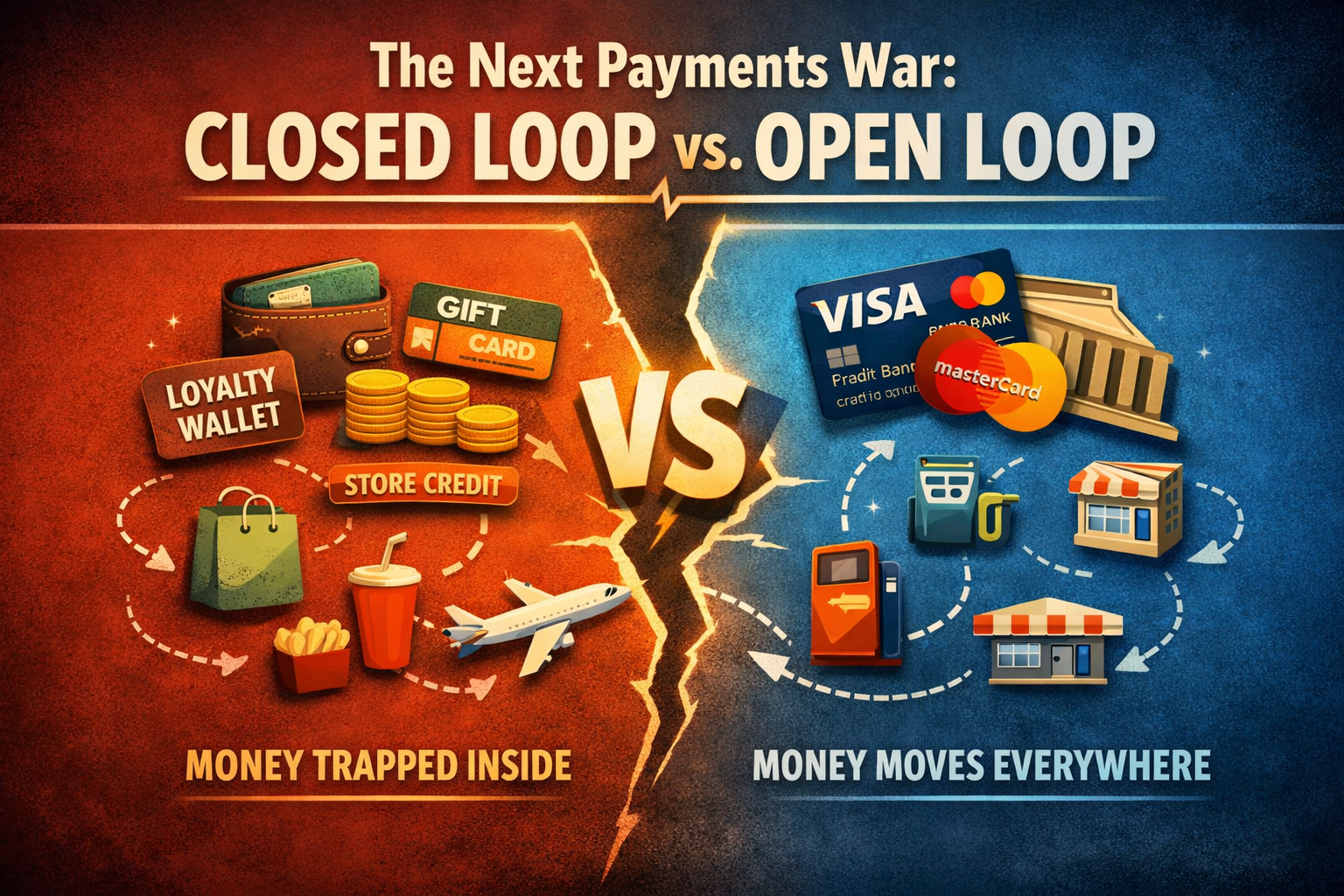
    Most of us are used to open-loop money: your debit card, credit card, or bank account. These work almost anywhere.

    But there’s another kind: closed-loop money. This is value that lives inside a specific app or store.

    Think:

    • Your Amazon gift card balance
    • Starbucks rewards stars
    • Uber Cash
    • Store credit from a return
    • Credits in a gaming app

    This isn’t new. What is new is how big and strategic these “walled gardens” have become. Companies are designing experiences so you keep money inside their world.

    Why Companies Love “Stored Value”

    From a business perspective, it makes sense. If you already have a balance in their app, you’re more likely to return. It costs them less in fees, and they learn more about your habits.

    For you, it can mean more perks, smoother checkouts, and tailored rewards.

    The Unseen Consequence

    Here’s what often goes unnoticed: when you pay with a gift card balance or loyalty points, no “traditional” payment happens. Your credit card network doesn’t see that transaction, even though a sale occurred.

    The real competition is shifting—from the moment you tap your phone, to the moment you load money into an app.

    The Path Forward: Connection, Not Just Competition

    This isn’t a winner-takes-all fight. The future isn’t closed-loop or open-loop—it’s both.

    The opportunity lies in connecting these systems. Imagine seamlessly using rewards points across different stores, or moving value between apps as easily as sending a text. The infrastructure behind your credit card is perfect for enabling this.

    What This Means for Us

    The next decade in payments will be defined by how these two models work together. The businesses that succeed will be those that blend the convenience of stored value with the flexibility of your traditional cards.

    They’ll design experiences that feel simple for you, while being smart about where your money resides.

    That’s the real shift happening right under our fingertips. It’s not just about how you pay. It’s about where your money calls home.

  • Commercialisation Is a Muscle, Not a Deck

    Commercialisation Is a Muscle, Not a Deck


    As the year winds down, one lesson stands out from building payment products across APAC. Most strategies don’t fail because they’re wrong. They fail because commercialisation is treated as a launch event, not a repeatable capability.

    The deck is usually solid. Clear vision. Confident numbers. Ambitious timelines.
    Reality starts after go-live.

    In APAC, commercialisation is less about announcing features and more about making them work reliably across markets, partners, and use cases. Scale doesn’t come from ideas alone. It comes from execution that can be repeated without drama.

    A few patterns I’ve seen consistently:

    – Execution beats sophistication.
    – Products scale when sales teams can explain them simply, partners can integrate them predictably, and operations can support them without custom fixes.
    – Local nuance matters more than central playbooks.
    – Regulation, customer behavior, and partner incentives vary sharply across the region. Platforms that win design for flexibility, not uniformity.
    – Commercialization is a system, not a handoff.

    Strong teams stay close to customers and partners well after launch, refining pricing, onboarding, and support as usage grows. This is also why newer conversations around digital assets or blockchain often feel overcomplicated.

    The commercial use cases are familiar:
    – Card payments, sometimes funded by stablecoins
    – Faster and more competitive cross-border settlement
    – Loyalty and stored value in new form factors

    The real challenge isn’t the technology, it’s whether teams can sell, integrate, operate, and scale these capabilities responsibly, within regulation and real customer workflows.

    Platforms that succeed treat commercialization as a muscle they continuously train. They invest in clear APIs, strong partner tooling, disciplined rollout, and fast feedback loops.

    In payments, being first rarely wins. Being ready to scale repeatedly does.

    As we look ahead, I’m less interested in the next big strategy deck and more focused on building execution muscle that compounds over time. That’s where durable advantage is created.

  • Crypto-Native Loyalty: Letting Customers Spend Points Across Borders and at POS

    Crypto-Native Loyalty: Letting Customers Spend Points Across Borders and at POS

    For years, banks have been telling customers that rewards points are “as good as cash.”
    In reality, they’re not.

    Points are locked inside catalogues, restricted by geography, and often expire before the customer can redeem anything meaningful. Cross-border travel, multi-country lives, and global e-commerce have exposed how outdated most loyalty programs really are.

    Now imagine a different reality:

    • Your customer earns points in Singapore.
    • Converts them into a regulated, tokenized asset.
    • Spends them instantly at a POS terminal in Tokyo, or online with a merchant in London.
    • No clunky catalogues, no opaque FX, no “please allow 7–10 working days.”

    That’s the promise of crypto-based loyalty programs for banks – not meme coins and speculation, but tokenized valuethat’s programmable, portable, and usable at the point of sale.

    Let’s break down what this could look like.

    What’s broken in today’s bank loyalty programs

    Most bank loyalty systems were designed for a very different era:

    1. Closed and fragmented
      • Points are locked to one bank, one geography, one catalogue.
      • Cross-border redemption is either impossible or painfully manual.
    2. Poor real-time utility
      • Customers can’t easily use points “in the moment” at POS.
      • Redemption journeys are separate from the payment flow.
    3. Hidden economics
      • Breakage is high, but so is operational cost and partner friction.
      • FX, settlement, and reporting across partners is messy and slow.
    4. Customer frustration
      • Complicated rules, blackout dates, minimum redemption thresholds.
      • The perceived value of points is much lower than the cost to the bank.

    In short: traditional points are trapped value. Tokenization is a way to unlock and orchestrate that value.

    What do we mean by “crypto-based” loyalty?

    Forget speculative coins. Think regulated, bank-led digital tokens:

    • Each loyalty point (or bundle of points) is represented as a token on a controlled ledger (which could be a permissioned blockchain or tokenized ledger managed by the bank / consortium).
    • Tokens can be:
      • Earned from banking activity (spend, bill payments, product usage).
      • Converted from existing points into token form.
      • Redeemed or spent at POS or online, just like currency, within rules set by the bank.

    Depending on regulation and design, these tokens might be:

    • closed-loop utility token (usable only with participating merchants & partners).
    • Or a stablecoin-like instrument pegged to fiat value (e.g., 1 token = 1 unit of local currency equivalent), with clear AML/KYC controls.

    The key shift: points become programmable value that can move across countries, partners, and channels in a standardized way.

    How cross-border and POS use cases come to life

    Here’s how a crypto-native loyalty system could work in practice.

    1. Cross-border earn & burn

    • Customer spends on a bank card in Country A.
    • Earns loyalty tokens, visible in the bank’s app in near real time.
    • While travelling in Country B, the customer:
      • Pays at a partner merchant’s POS.
      • Chooses “Pay with Tokens” or “Pay with Tokens + Card” in the payment flow.
    • The system:
      • Converts token value to local fiat equivalent using agreed FX logic.
      • Settles with the merchant in local currency.
      • Updates token balance instantly.

    No catalogue, no vouchers, no “redeem miles for shopping” hacks. Just earn here, use there.

    2. Pay-with-points at POS

    At POS, the bank can expose token-based loyalty as another tender type:

    • The terminal or online checkout queries the bank’s loyalty/token service.
    • Customer sees options:
      • Pay fully with tokens
      • Part-pay with tokens + card
      • Or keep tokens for later
    • A simple UX (“Use 5,000 points to save $20?”) but backed by a token transfer on the bank’s ledger.

    This lets banks move from “earn and forget” to real-time, in-journey rewards.

    3. Global partner ecosystem

    Because tokens sit on an interoperable ledger, partner onboarding becomes easier:

    • Airlines, hotels, marketplaces, and retail chains can all plug into the same token rails.
    • Banks can support:
      • Instant point swaps between brands
      • Joint promotions powered by shared token pools
      • Multi-country campaigns without building 10 different catalogues

    The more partners join, the stronger the network effect.

    Why banks should care

    This isn’t just a shiny tech upgrade. It drives real business value:

    1. Deeper engagement & higher spend
      • Real-time, usable value at POS encourages more card usage and product adoption.
      • Cross-border usability makes your card the “top of wallet” when customers travel.
    2. Better economics & lower breakage risk
      • Tokenization improves tracking, pricing, and forecasting of loyalty liabilities.
      • Programmability allows smart rules: dynamic earn rates, expiry, and partner-funded rewards.
    3. Interoperability instead of one-off integrations
      • One token standard can support many partners and markets.
      • This reduces long-term integration and ops costs compared to bespoke catalogue builds.
    4. New revenue streams
      • Partner onboarding fees, token float income (where compliant), data & insights monetization.
      • Premium services for high-value customers (e.g., instant FX-free redemption, curated partner access).
    5. Strategic positioning for the “programmable money” era
      • CBDCs, stablecoins, and tokenized deposits are coming.
      • A token-based loyalty layer is a safe way for banks to learn, experiment, and build capabilities without betting the core balance sheet.

    Design choices that matter

    To make this real (and not just a slide in a strategy deck), banks need to get a few things right:

    1. Regulation & compliance first
      • Work closely with regulators on token classification, AML/KYC, and cross-border flows.
      • Decide: Are tokens purely a loyalty construct, or quasi-monetary? Where can they be redeemed for cash, if at all?
    2. Stable value, not volatility
      • Customers should never feel like their points are “trading.”
      • Peg tokens to a predictable value (e.g., 100 points = 1 unit of fiat-equivalent) and keep pricing rules transparent.
    3. Ledger & infrastructure choices
      • Permissioned blockchain vs tokenized internal ledger.
      • Single-bank vs multi-bank consortium vs scheme-led rails.
      • Integration into core banking, card systems, and POS networks.
    4. FX & cross-border settlement logic
      • Who bears FX risk and how is it priced into token redemption?
      • How are merchants settled in their local currency while loyalty value is managed centrally?
    5. Customer experience
      • Simple, intuitive UX: “You have 12,500 points. Use 5,000 to save SGD 20 today?”
      • Clear visibility of:
        • Earn history
        • Redemption history
        • Value in different currencies / countries

    If customers need a whitepaper to understand how to use points, the design has failed.

    What’s the practical starting point?

    For most banks, the journey doesn’t need to start with a big-bang replacement.

    A realistic roadmap could be:

    1. Phase 1: Tokenize existing points “behind the scenes”
      • Move from batch-based points ledgers to a token-based ledger.
      • No customer change yet, but you get real-time visibility, better accounting, and a modern foundation.
    2. Phase 2: Introduce pay-with-points at POS in home market
      • Start with a few strategic merchants.
      • Let customers part-pay with points through existing cards or app-based QR.
    3. Phase 3: Extend cross-border & partner network
      • Partner with regional merchants, travel companies, and marketplaces.
      • Support redemption in 1–2 additional markets with clear governance and FX rules.
    4. Phase 4: Consortium or scheme-level collaboration
      • Explore multi-bank or card-scheme led rails that standardize token specs and acceptance.
      • This is where network effects and serious scale kick in.

    Closing thought

    Banks have been sitting on billions in unspent loyalty value.
    Crypto and tokenization are not about turning banks into exchanges.
    They’re about finally making loyalty live up to the promise of being “as good as cash” – usable, portable, and relevant in the moment of payment, across borders and channels.

    The institutions that move first will not just have a “cool loyalty program.”
    They’ll own the rails on which the next decade of programmable rewards and everyday digital value will run.

  • The Quiet Achiever’s Guide to Landing a CXO Role

    The Quiet Achiever’s Guide to Landing a CXO Role

    Let’s be honest: most CXO job descriptions are missing a key requirement. They list leadership and strategy, but they rarely mention the unspoken rule—that these roles are often filled through networks, not online applications.

    If the thought of “working a room” makes you want to hide in the bathroom, you’re not alone. The good news? You don’t have to become a charismatic schmoozer to get there. You just need to play a different, quieter game.

    Your game is the long game, and it’s surprisingly powerful.

    1. Think Turtle, Not Hare

    Forget the idea of networking as a transaction. You’re not dropping a coin into a vending machine and expecting a job to pop out.
    This is about compound interest. Tiny, consistent actions—a comment here, a shared article there—build up silently. One day, you’ll look up and realize you’ve built real momentum.

    2. Small Steps Beat Grand Gestures

    You don’t need to make a big, awkward speech. The magic is in the micro-connections.

    • Seen a post you liked? Leave a genuine comment.
    • Read an article that reminded you of someone? Hit forward.
    • Appreciate someone’s work? Send a two-sentence note saying so.

    These small acts feel authentic, not forced, and they keep you on people’s radar without the ick factor.

    3. Let Your Work Do the Talking

    At the CXO level, charm is overrated. Credibility is everything.
    Focus on building a reputation as someone who knows their stuff. Share your hard-won insights, mentor someone junior, or talk about a project you’re proud of. Your track record and trustworthiness are your greatest networking assets.

    4. Go for Depth, Not Width

    Trying to connect with everyone is exhausting and ineffective. Instead, be a strategist.
    Pick a handful of people (say, 10-15) in your field whose work you genuinely admire. Follow their journey. Engage with their ideas when you have something real to say. Consistent, thoughtful attention to a few is far more powerful than scattered outreach to hundreds.

    5. Be a Gardener, Not a Hunter

    The best time to plant a tree was 20 years ago. The second-best time is now.
    Start building connections before you need them. Offer a helpful introduction, share a relevant insight, or cheer on a peer’s success. People remember who was there when there was nothing obvious to gain.

    6. Build Your Own Gravity

    Instead of chasing after people, create a space that pulls them in.

    • Share a short, sharp lesson you learned from a mistake.
    • Write down a framework that worked for your team.
    • Post a real story about a leadership challenge.

    When you share valuable ideas, you don’t have to find people—they find you. This is the quiet person’s superpower.

    7. Embrace Your Slow-Brew Advantage

    If you’re not a natural networker, your secret weapon is patience. Your relationships might take longer to build, but they’ll be rooted in genuine respect and shared value. When a top-level role opens up, that depth of connection matters far more than a thousand superficial LinkedIn contacts.

  • The Next Phase of Merchant Acceptance: From Physical Terminals to Programmable APIs

    The Next Phase of Merchant Acceptance: From Physical Terminals to Programmable APIs

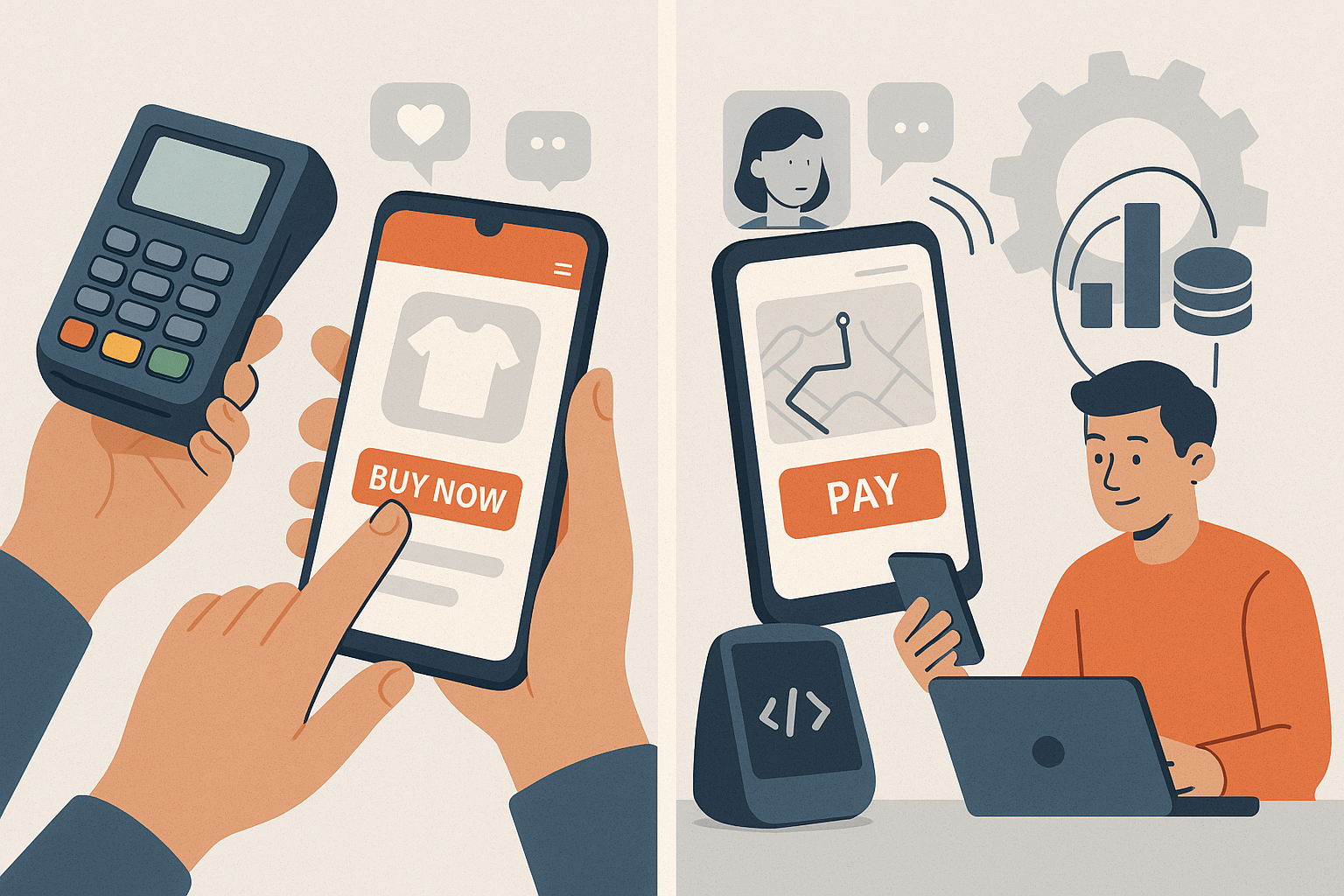
    For decades, the payment terminal defined commerce. A physical box, a familiar beep, a printed receipt. But commerce has evolved. It now lives in mobile apps, social media, and connected devices. The very definition of “merchant acceptance” is being rewritten.

    The future isn’t about installing hardware; it’s about activating an ecosystem through APIs.

    From Hardware to Hyper-Connected Experiences

    The old model was hardware-centric: set up a terminal and process transactions. The new model is software-driven and experience-led. Modern businesses—from global platforms to solo entrepreneurs—demand payments that are:

    • Frictionless: A one-click buy button in a mobile app.
    • Contextual: Paying for a ride within a ride-hailing chatbot.
    • Embedded: Seamless checkout inside a game or on a smart device.

    This shift is powered by APIs (Application Programming Interfaces), the invisible rails of modern finance. They don’t just move money; they connect payments to loyalty programs, identity verification, and real-time data analytics, creating unparalleled value.

    The Rise of the Merchant-as-a-Platform

    The biggest change is structural. Today’s merchants are often platforms themselves—hosting thousands of sellers, franchisees, and service providers.

    To serve them, payment providers must evolve. The simple acquirer-merchant relationship is no longer enough. The new imperative is ecosystem orchestration, delivering modular APIs for:

    • Instant Onboarding of new users and sub-merchants.
    • Dynamic Payouts and sophisticated treasury management.
    • Data-Driven Insights that inform business strategy.
    • Embedded Credit and financial services.

    In this new world, acceptance is programmable. The terminal is no longer a device; it’s a line of code.

    What’s Next? Winning in the API Economy

    The leaders in the next decade will be those who master three pillars:

    1. Interoperability: APIs that work seamlessly across any platform, channel, or region.
    2. Trust & Security: Building robust, compliant systems that protect every transaction.
    3. Data Intelligence: Leveraging payment data to power personalization, fraud prevention, and business growth.

    We will see the convergence of payments, loyalty, and digital identity into single, powerful API frameworks.

    The critical question for every business is no longer “How do we accept payments?” but “How do we accept opportunity?”

    How are you embedding payments into your customer experience? Let’s discuss in the comments.

    #Fintech #DigitalPayments #APIs #EmbeddedFinance #PaymentOrchestration #DigitalTransformation #Commerce #Innovation #Asia #APAC #LinkedInNewsAsia

  • The APAC Payments Puzzle: Stitching Together a Fragmented Landscape

    The APAC Payments Puzzle: Stitching Together a Fragmented Landscape

    If you’re building, selling, or moving money in Asia-Pacific, you know the feeling. The payments stack has never been more powerful, yet the experience has never felt more… patchwork.

    We’ve built towering skyscrapers of financial technology, but they’re connected by rickety rope bridges. The incumbents? They own the foundations—unbeatable on coverage and compliance. But value is leaking from the seams between them: in clunky cross-border journeys, in data trapped in silos, in loyalty programs that frustrate more than they delight.

    This isn’t just a problem. It’s an opportunity. But for a new player, the only way in is not with a bigger hammer, but with a smarter needle and the right thread.

    Act I: The Lay of the Land – A Kingdom of Powerful, Isolated Castles

    Picture the APAC payments landscape not as a single stack, but as a continent of formidable, walled cities.

    • The Gateways & Acquirers are the well-maintained main roads in mature markets. They’re reliable, but the real battle for supremacy is now in the alleys and side streets—the quality of local payment methods, the speed of settlement, the strength of tokenization.
    • The PayFacs are the express lanes, getting merchants to market at lightning speed. But the toll booth—onboarding and risk—is still manned by humans in too many places, creating frustrating bottlenecks for SMEs.
    • The Orchestrators are the air traffic control towers. They’re brilliant at routing payments between different providers, but most only track the “planes” (transactions). Few have a unified view of the “weather” (fraud), the “passenger loyalty” (offers), and the “airport security” (identity).
    • Loyalty & Campaigns are the bustling, disconnected marketplaces. Issuers, merchants, and wallets all run their own bazaars with different currencies. The experience of cashing in your loyalty points at a physical store versus an app is a roll of the dice.

    The kingdoms are powerful, but they don’t talk to each other. And in the gaps between them, merchant and customer frustration grows.

    Act II: The Pain Points – Where the Cracks Become Canyons

    This fragmentation isn’t just an architectural debate; it’s a daily operational headache. It shows up as:

    • cross-border payment that feels anything but seamless for the merchant and the end-user.
    • small business owner waiting days for underwriting when alternative data could grant them instant, safe access to capital.
    • marketing team unable to tie a coupon redemption to a purchase history, missing the chance to create a truly valuable customer moment.
    • CFO squinting at a statement, unable to decipher the true cost-to-accept or the ROI on their value-added services.

    The market isn’t asking for another pretty dashboard. It’s asking for a translator, a connector, a unifier.

    Act III: The Blueprint – Becoming the Region’s Master Weaver

    So, is there room for a new player? Absolutely. But the winning profile isn’t “another PSP.” It’s a Sidecar Growth Layer.

    Imagine a platform that doesn’t try to rip and replace the existing rails but sits gracefully on top of them. It weaves them together with a single, intelligent rules engine that orchestrates not just payments, but also loyalty, installments, and identity. It makes the entire financial ecosystem smarter, not just faster.

    The Wedges to Force Entry:

    1. The Bank’s New Arm: Become a Bank-Partnered PayFac. Offer banks and large merchants instant onboarding, sophisticated fraud controls, and funds management as a service. Share the economics; respect their balance sheet and compliance legacy.
    2. The Vertical Visionary: Pick a complex industry—like travel, healthcare, or marketplaces—and build its Operating System. Ship payments, financing, and loyalty as one seamless kit that solves the whole workflow, not just the transaction.
    3. The Borderless Bridge: Create a Cross-border Commerce Fabric that makes international payments feel domestic. Use smart local-method routing and transparent FX, and price your value on the uplift you create, not just the volume you process.

    The Table Stakes: Without these, you don’t even get a seat at the table in Singapore or Sydney: impeccable security (PCI L1, ISO 27001), proactive regulatory alignment (MAS, etc.), and crystal-clear data governance.

    Act IV: The Journey – A Map, Not a Mandate

    You can’t conquer APAC all at once. You must respect its intricate tapestry of maturity.

    • Stage 1 (Singapore, India): The Sophisticates
      • The Play: Lead with hard numbers. Your “sidecar” must prove in a 60-90 day pilot that it lifts authorization rates and slashes costs. Partner with banks for credibility and win a lighthouse enterprise to build your case study. Sell quantified uplift.
    • Stage 2 (Malaysia, Thailand, Australia): The Pragmatists
      • The Play: Bundle a “PayFac-lite” offering with instant onboarding, and tie it to a loyalty wallet that works everywhere. Land a flagship partnership with a bank and a major retailer. Price with a clear, undeniable ROI model.
    • Stage 3 (Indonesia, Philippines): The Builders
      • The Play: Lead with your Vertical OS. Solve the entire messy flow for a marketplace or a telco—KYC, escrow, payouts, loyalty. Assemble a field-integration team to handle the last-mile work with local PSPs and wallets. Earn trust by solving acute pain.

    The Final Word: The Invitation

    APAC doesn’t crown the loudest player. It rewards the most thoughtful operator—the one who respects local rails, fixes the day-to-day pains, and makes everyone else in the value chain look good.

    Be the quiet layer that improves outcomes for acquirers, banks, and merchants alike. If you can show a CFO a chart that goes up and to the right within the first quarter, you won’t just win a contract.

    You’ll get invited to the Christmas party. And in APAC, that’s when you know you’ve truly arrived.

  • Building the Bridges of Digital Commerce — Why Access Matters as Much as Innovation

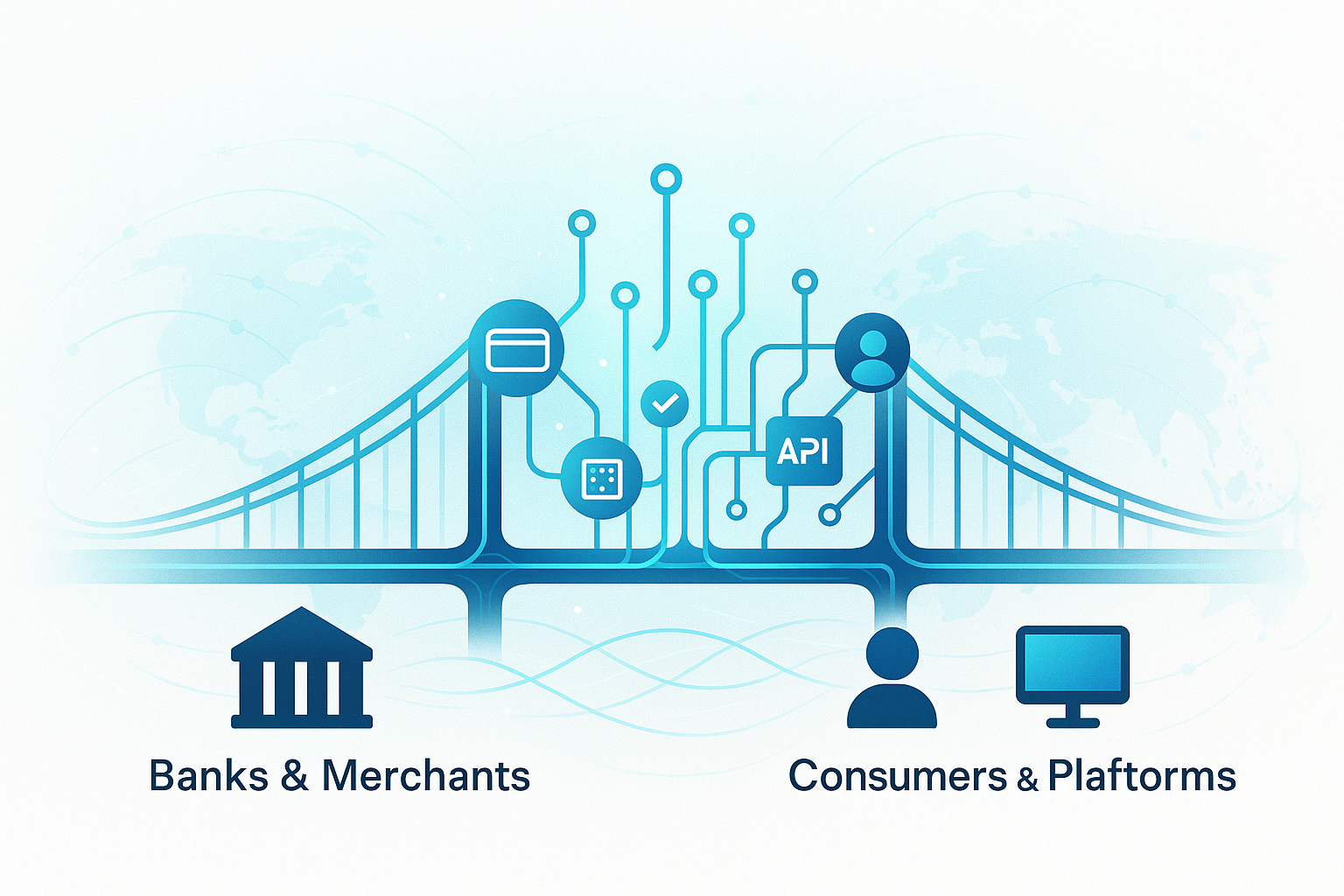
    Building the Bridges of Digital Commerce — Why Access Matters as Much as Innovation

    Every payment today feels instant. Tap, scan, or click — it just works. But behind that “instant” lies a complex web of gateways, APIs, and partnerships that quietly keep global commerce running. And that’s where the real magic — and challenge — happens.

    The Hidden Infrastructure of Growth

    When people talk about “innovation” in payments, they often picture shiny new apps or sleek cards. But innovation rarely happens in isolation. It happens in connection — between banks, merchants, processors, and platforms. The unsung heroes are the access and gateway layers that make every payment flow possible, whether it’s a QR in Bangkok, an A2A transfer in Jakarta, or a tokenized checkout in Tokyo.

    Having spent years working with issuers, merchants, wallets, and acquirers across APAC, I’ve seen how access defines opportunity. A market’s readiness to adopt new rails isn’t just about technology — it’s about orchestration. Aligning the pipes, partners, and products that turn potential into scale.

    From Pipes to Partnerships

    The next wave of digital commerce won’t be about who owns the rails. It’ll be about who orchestrates the connections. The future belongs to the networks and platforms that can seamlessly bridge closed and open loops, combine loyalty with payments, and deliver secure, intelligent access to every ecosystem — cards, wallets, and account-to-account flows alike.

    That’s why I’m particularly drawn to roles that look beyond transactions — toward platform-level orchestration. The opportunity to help merchants, banks, and fintechs unlock new value through smarter routing, better APIs, and data-driven engagement is where the real growth frontier lies.

    Leadership Beyond the Technical

    In a region as diverse as Asia Pacific, scaling a payments business isn’t about one-size-fits-all strategy. It’s about empathy, context, and collaboration. Leading cross-market teams from Singapore to Manila to Hong Kong has taught me that technology may connect systems, but leadership connects people.

    Building trust across cultures, aligning local priorities with regional goals, and fostering innovation without chaos — that’s the part of the job I enjoy most. Because a truly resilient payments ecosystem isn’t built by code alone; it’s built by people who understand both the tech and the trust behind it.

    Why Access Is the New Advantage

    Access and gateways might sound like back-end plumbing, but they’re actually the front line of financial inclusion and digital transformation. They decide who gets to play, how fast new products launch, and how seamlessly value moves between ecosystems.

    As I look at where the industry is heading — embedded finance, real-time payments, open banking — it’s clear that access is becoming the new advantage. Those who can simplify connectivity while scaling securely will define the next decade of digital commerce.

  • Payments in APAC: A Crowded Dance Floor, But Who Controls the Music?

    Payments in APAC: A Crowded Dance Floor, But Who Controls the Music?

    Across the Asia-Pacific region, a universal scene unfolds at the checkout counter: a mosaic of QR codes, a battle for prime real estate on smartphone screens, and the rapid adoption of domestic real-time payment rails. It resembles a crowded party where every player is vying to control the music.

    The critical question remains: who is the true host, and which players will endure when the tempo inevitably shifts?

    Two Distinct Neighborhoods Within One Region

    While geographically adjacent, Southeast Asia and North Asia represent fundamentally different paradigms in the payments landscape.

    Southeast Asia: The Innovation Laboratory
    Southeast Asia serves as a dynamic proving ground. The region is simultaneously experimenting with every available payment rail—QR codes, digital wallets, super-apps, and domestic account-to-account (A2A) infrastructure. Merchant acquisition is a fiercely competitive arena characterized by:

    • Government-led initiatives promoting zero-MDR QR code acceptance.
    • Wallet providers engaging in aggressive cashback wars to subsidize user acquisition.
    • Super-apps leveraging payments as a core feature within bundled ecosystems like food delivery, ride-hailing, and e-commerce.

    The environment is fragmented and intensely competitive, yet it boasts undeniable growth. For many consumers, digital wallets are the gateway to financial services. For merchants, the choice often boils down to whichever solution delivers customers at the lowest cost.

    North Asia: The Established Boardroom
    In stark contrast, North Asia (Japan, South Korea, Taiwan, Hong Kong) operates with the maturity of established markets where card-based payments are deeply entrenched. The landscape is orderly, structured, and driven by loyalty. While digital wallets exist, they typically operate on top of existing card networks. Consumer preference is less about payment method availability and more about the value of the loyalty ecosystem—be it credit card rewards, retail partnerships, or co-branded benefits.

    Innovation here focuses on refinement:

    • Sophisticated Installment Plans: Such as Japan’s long-standing affinity for “3-pay” card installments.
    • Integrated Loyalty Platforms: Connecting transit, retail, and dining into seamless reward systems.
    • Advanced Regulation & Consumer Protections: Enhancing trust in mature financial systems.

    In essence, one region is still constructing the foundational infrastructure, while the other is focused on enhancing the consumer experience atop a stable base.

    The Global Schemes: A Quiet, Enduring Influence

    Amid the buzz surrounding local champions like UPI, PIX, and PromptPay, it is premature to relegate global payment networks like Visa, Mastercard, and UnionPay to the past. Their enduring relevance stems from three key strengths:

    1. Global Trust & Interoperability: They provide a trusted, reliable backbone for cross-border commerce.
    2. Strategic Embeddedness: They are increasingly integrating with local wallets and fostering interoperability between disparate QR code systems.
    3. Focus on New Frontiers: They are strategically pivoting towards complex, high-value areas like B2B flows, SME financing, and card-based installments—spaces where domestic rails are less effective.

    The music may have changed, but the global schemes continue to own and operate the critical sound system.

    The Strategic, Not Just Technological, Rise of A2A

    The dominance of A2A rails like India’s UPI or Brazil’s PIX is often misattributed to superior technology alone. In reality, they are frequently geostrategic projects. Driven by central banks seeking cheaper, sovereign payment infrastructure, their adoption is accelerated by merchants eager to escape the higher costs of card acceptance.

    India’s UPI, with its near-zero Merchant Discount Rate (MDR), became an obvious choice for merchants, and government backing made widespread adoption a certainty. This is a top-down model of success. While organic, bottom-up models like Poland’s BLIK exist, they are the exception.

    The narrative is not simply “cards vs. A2A.” It is a functional division of labor. Card networks maintain strength in brick-and-mortar retail for their predictability and global reach, while e-commerce is rapidly tilting towards lower-cost A2A options. As digitization deepens, this tilt will only become more pronounced.

    The Next Frontier: When Payment Rails Become Intelligent

    Once payment rails become commoditized, competition shifts from cost to intelligence. This is the domain of Artificial Intelligence.

    • Strategic Merchant Growth: AI can identify high-potential merchants, predict churn, and determine the optimal timing for upselling loyalty or lending products.
    • Dynamic Fraud Defense: Static rule-based systems are obsolete. AI excels at real-time anomaly detection across QR, card, and wallet transactions.
    • Smart Transaction Routing: An AI-powered orchestration layer can dynamically select the optimal payment rail at the point of sale—balancing cost, speed, and reward value for a competitive edge.
    • Personalized Engagement: Clunky loyalty programs can be transformed into seamless, personalized lifestyle experiences through AI-driven insights.

    AI will not build the rails, but it will decisively determine which ones thrive.

    The Merchant’s Strategic Calculus

    Merchants are active architects of this evolution. While cost is paramount—favoring A2A and QR solutions—it is balanced against the need for reliability, speed, and catering to consumer preference.

    • Large Retailers value the predictability and global interoperability of card networks.
    • SMBs favor the simplicity and low fees of wallets and QR-based systems.
    • E-commerce Players, operating on thin margins, are increasingly driven towards the cost efficiency of A2A payments.

    The collective voice of merchants will ultimately dictate the winning rails in each market.

    The Road Ahead

    The APAC payments landscape is not slowing down; it is accelerating in its complexity.

    • Southeast Asia will continue its dynamic, multi-rail experimentation.
    • North Asia will deepen the sophistication of its mature, loyalty-driven ecosystems.
    • Global schemes will embed themselves further into local fabrics and dominate the complex B2B payments space.
    • AI will emerge as the invisible hand, shaping outcomes in fraud prevention, merchant strategy, and transaction routing.

    In a room this crowded, success is no longer about who shouts the loudest. It is about providing the intelligence that everyone relies on. And increasingly, that authoritative voice will belong to AI.