Category: Uncategorized

  • SMEs, Cards & a Shot of Espresso: Building a GTM Plan That Actually Works!

    SMEs, Cards & a Shot of Espresso: Building a GTM Plan That Actually Works!

    Let’s be honest — launching a new SME credit card program often feels like assembling IKEA furniture without the manual. You know it’s going to be great when done, but there are screws missing, people arguing, and someone’s yelling, “Just use UPI!”

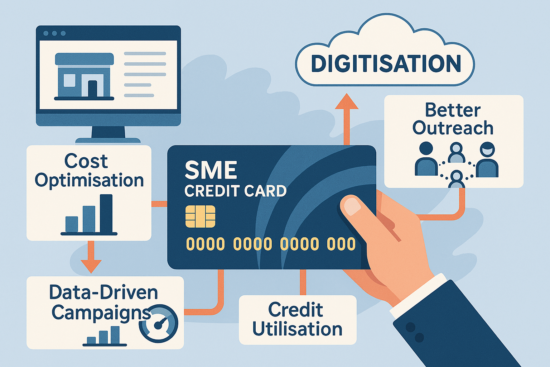
    As someone who’s spent the better part of my career in the trenches of card issuance, merchant acquiring, loyalty, and alternative payments across APAC, I’ve seen banks and fintechs alike dance around SME card programs. But the truth is — when done right — they can be absolute game-changers for banks. Not just from a “look-we-launched-a-product” perspective, but in terms of revenue, stickiness, and ecosystem play.

    So how do you create a go-to-market (GTM) plan for an SME credit card that doesn’t just exist, but actually thrives?

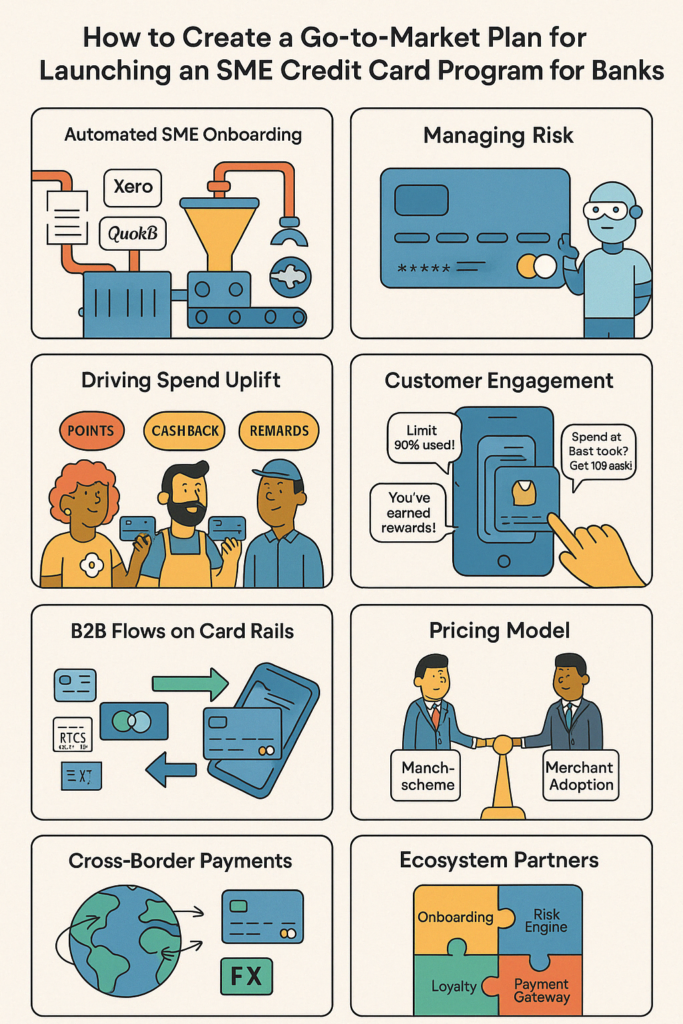
    Step 1: Fix Onboarding — Because SMEs Don’t Have Time for Your 7-Page Form

    SMEs today are digital-first. They don’t want to stand in line, submit 45 documents, or wait 3 weeks for a credit decision.

    Automated onboarding through API integrations (think: KYC, KYB, GST data scraping, digital credit scoring) is no longer a luxury — it’s hygiene.

    Bonus points if your system integrates directly with cloud accounting tools (Xero, QuickBooks) for dynamic credit line decisions.

    Step 2: Manage Risk — But Don’t Kill the Excitement

    Yes, SMEs come with higher risk. But guess what? So did every startup before they became unicorns.
    Smart use of:

    • Virtual credit limits linked to transaction categories
    • Real-time spend controls
    • Supplier categorization
    • Embedded insurance

    …can help you build a risk-aware, not risk-averse product.

    Step 3: Make It Swipe-Worthy — Spend Uplift Starts with the Right UX

    An SME card should not be a “me-too” product. It should:

    • Allow physical + virtual issuance (imagine a fleet manager getting virtual fuel cards in seconds)
    • Enable instalments for B2B purchases
    • Offer rewards that actually matter (skip the spa voucher, give cashback on logistics and SaaS tools)

    Create segment-based campaign templates to target micro, small, and medium businesses differently. Your florist and your freight company have very different needs!

     Step 4: Build a Real Engagement Plan (Emails ≠ Engagement)

    Want to keep your SME customers engaged? Think like a loyalty marketer.

    • Integrate your card into a closed loop rewards ecosystem for everyday business spend
    • Offer points-for-payments, access to business tools, and early pay discounts
    • Use WhatsApp, not email, for proactive nudges (“Hey, your spend is 90% of your limit. Want a top-up?”)

    And yes, webinars for SMEs are still a thing — if they come with coffee and real value.

    Step 5: Drive B2B Flows On Card Rails — It’s Time to Move Away from RTGS and Cheques

    Here’s where virtual cards shine. Instead of traditional banking instruments:

    • Use single-use virtual cards for vendor payments
    • Enable reconciliation using enriched data
    • Create buyer-seller platforms where card payment is a default
      You’ll shift large B2B volumes on card rails, bringing in interchange, MDR, and precious data.

    Step 6: Tackle Pricing — Dear Schemes, We Need a Heart-to-Heart

    Standard SME pricing models often don’t cut it. High interchange fees can kill the use case.
    Schemes need to:

    • Create custom SME interchange programs
    • Offer volume-based rebates to banks and issuers
    • Support cross-border programs with competitive FX spreads

    Let’s be real — the competition here is not another card. It’s SWIFT, and nobody’s sending a happy emoji after using SWIFT for a payment.

    Step 7: Cross-Border — Hello, Global SME!

    SMEs are going global. Why shouldn’t their cards?

    A virtual card program with multi-currency wallets or optimized FX routing helps:

    • Reduce payment costs
    • Increase visibility and control
    • Allow real-time reconciliations

    Banks should integrate with platforms like Wise, Airwallex, or Nium — not to compete, but to collaborate. These players help banks deliver global payment capabilities without rebuilding the wheel.

    Step 8: Build Your Ecosystem — You Don’t Need to Go Solo

    Let’s ditch the “build everything in-house” mindset. The best GTM plans involve:

    • Fintech enablers (for onboarding, risk scoring, loyalty, APIs)
    • Payment processors with SME-first capabilities
    • Marketing partners who understand SME lifecycle
      They’re not competition. They’re your shortcut to speed and agility.

    Finally:

    Banks that truly get SME cards right won’t just issue plastic. They’ll unlock new revenue lines, increase SME stickiness, and build ecosystems where SMEs thrive — with cards at the core.

    It’s not just about the card. It’s about becoming the financial OS for SMEs — and if that’s not exciting, I don’t know what is.

    So here’s a question for all the schemes, banks, fintechs and enablers out there:

    What’s the one thing holding you back from launching your SME card program today?
  • Learning AI Tools as a Sales Leader: Notes from Someone Just Getting Started

    Learning AI Tools as a Sales Leader: Notes from Someone Just Getting Started

    AI tools

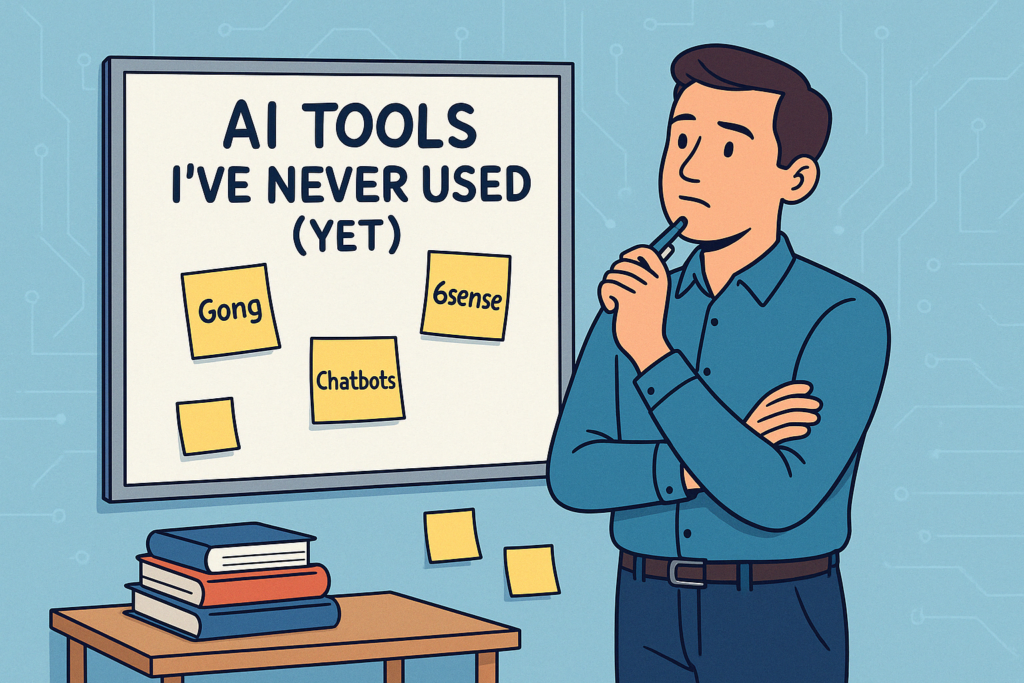
    Let me start with full transparency—I’ve never used tools like Gong, 6sense, or AI-powered chatbots in my day-to-day sales work.

    Not because I wasn’t interested, but because my career path never demanded it. I’ve been fortunate to lead sales and business teams across Southeast Asia, working on exciting projects in issuing, acquiring, loyalty, and alternative payments. Yet, until now, AI hasn’t been a core part of my sales approach.

    But that’s changing.

    I’m not writing this as an AI expert—far from it. Instead, I’m sharing my early thoughts as someone eager to learn, hoping this might resonate with fellow leaders who are also just starting to explore AI’s potential in sales.

    1. I Started with Questions, Not Tools

    There’s no shortage of flashy platforms and software out there. But before diving into demos or buzzwords, I took a step back and asked: What sales challenges am I actually trying to solve?

    • Could we qualify leads more effectively?
    • Are we missing subtle buying signals in conversations?
    • Could structured insights help us coach our team better?

    Only after clarifying the why did I begin exploring which tools might help. For instance, I learned that Gong isn’t just a call recorder—it uncovers insights across hundreds of conversations. 6sense can identify accounts actively researching solutions before they even reach out. I’m still wrapping my head around these concepts, but the possibilities are exciting.

    2. I’m Not Mastering the Tech—Just the Benefits

    I’ll be honest: I don’t understand how these tools work under the hood. I can’t explain the algorithms. But I do want to grasp how they fit into real-world sales.

    Right now, my mindset is simple:

    → What insights can these tools provide that I don’t already have?
    → How can they help my team sell smarter, faster, or more effectively?
    → Can they free up time so we focus less on admin and more on strategy?

    I don’t need to be fluent in AI—just in how it benefits my business.

    3. I Started Talking to the Right People (Finally!)

    Turns out, many people in organizations are already experimenting with AI—RevOps teams, sales enablement specialists, even marketers. Once I started asking around, I realized I didn’t have to figure this out alone.

    I also learned that starting small—like piloting a tool with one region or a single sales stage—is completely okay. Not everything has to be a full-scale digital transformation from Day 1.

    4. I Gave Myself Permission to Be a Learner Again

    This has been the most rewarding part.

    Once I let go of the pressure to “know it all,” I rediscovered the joy of learning. Now, I:

    • Follow insightful sales and AI voices on LinkedIn
    • Read newsletters and blogs from sales tech communities
    • Watch short webinars with zero expectations—just curiosity

    I even set aside 30 minutes each week for unstructured learning—no pressure, no deliverables, just exploration.

    5. My Mindset Is Shifting

    I used to think: “AI is for someone else.”

    Now I think: “If this can help me and my team grow, why wouldn’t I explore it?”

    The truth is, AI isn’t about replacing people—it’s about enabling better outcomes. For leaders like me, that means staying open to new ways of thinking, selling, and engaging.

    And if you’re a leader still figuring it out—I’m right there with you.

    In Closing

    I don’t have all the answers. I’m not even sure I’ve asked all the right questions yet.

    But I do know this: Staying curious, humble, and open to learning is the best approach I can take.

  • Midweek Fun: Curve Pay vs Big Tech: What It Means for Pricing, Schemes & the Future of Payments in APAC

    Midweek Fun: Curve Pay vs Big Tech: What It Means for Pricing, Schemes & the Future of Payments in APAC

    There’s a quiet revolution happening in payments—and for once, it’s not coming from Silicon Valley.

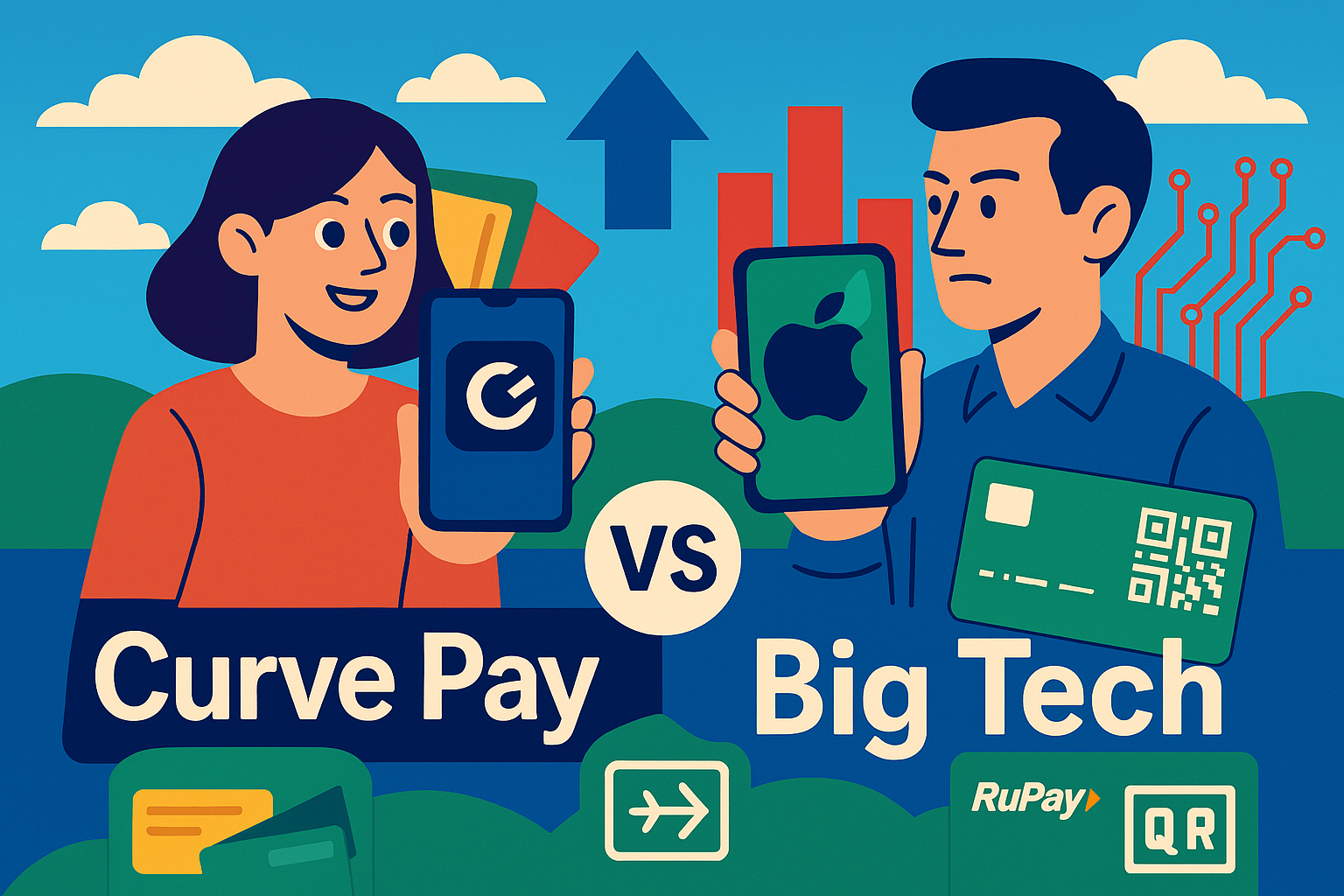
    London-based Curve Pay has officially stepped into the wallet wars, offering a multi-card, fee-free alternative to Apple Pay. It’s launching first on Android in the UK and Europe (with iOS coming soon), but this isn’t just another digital wallet. It’s a signal—one that could reshape pricing, payment rails, and power dynamics far beyond Europe, especially here in APAC.

    So, what’s really at stake? Let’s break it down.

    1. The Real Disruption: Pricing Power Shifts

    For years, wallet providers like Apple Pay and Google Pay have dominated with pricing models that aren’t exactly transparent. Merchants pay blended merchant discount rates (MDRs), often with little clarity on how much goes to issuers, acquirers, or the wallet itself.

    But Curve Pay is shaking things up. By pushing for fee-free NFC access (already approved in the EU, under review in the UK), it’s opening the door to more transparent—and potentially lower—costs for merchants. If more wallets can bypass toll fees and connect directly to hardware, pricing innovation will follow.

    And that could force schemes and acquirers to rethink their fee structures. The days of relying on gatekeepers for protection might be numbered.

    2. The Rise of Domestic Rails: RuPay, PromptPay & Local QR Codes

    In APAC, where domestic payment rails like RuPay (India), PromptPay (Thailand), DuitNow (Malaysia), and Napas (Vietnam) are already thriving, Curve’s model is a wake-up call.

    These local systems already offer lower interchange fees and are gaining traction in SME, transit, and government payments. But Curve’s flexibility—letting users assign smart rules or even switch payment methods after a transaction—could inspire these domestic networks to become more modular and interoperable.

    Imagine a RuPay card sitting inside a Curve-like layer that works seamlessly with UPI rails. Or national QR ecosystems integrating with a wallet that adds rewards, smart spending rules, or even crypto. The possibilities are intriguing.

    3. Schemes: From Control to Collaboration?

    Visa and Mastercard have spent decades building secure, scalable payment rails. But with new wallets disrupting the interface layer—and governments backing local alternatives—their pricing and positioning are under scrutiny.

    They now face a critical question:

    • Do they double down on proprietary rails?
    • Or do they partner with fintechs and regulators, offering open APIs and co-developed wallet ecosystems?

    Ironically, Curve’s model—which doesn’t issue cards but relies on users’ existing ones—could actually increase scheme-backed card usage. But it would happen outside the schemes’ own apps or experiences, forcing them to adapt.

    4. A New Idea: An “Interoperable Wallet Layer” for Closed & Open Loop Systems

    Here’s a thought I haven’t seen explored much:

    What if we had a universal wallet interface—brand-agnostic—that could integrate not just open-loop cards (Visa, Mastercard, RuPay), but also closed-loop programs, loyalty points, vouchers, local QR balances, and even stablecoins?

    A system where:

    • Merchants decide the order of payment acceptance (e.g., points first, QR second, card last).
    • Consumers set their preferred funding sources (e.g., wallet balance first, stablecoin next, RuPay card last).

    This wallet wouldn’t issue anything—it would orchestrate everything. The UX and operational gains for both merchants and consumers could be massive.

    Final Thoughts

    Right now, Curve Pay is a UK and Europe story. But its implications are global. As fee models open up, domestic networks evolve, and wallet layers gain traction, APAC is uniquely positioned to leapfrog with more inclusive, locally relevant innovations.

    The future of payments isn’t just Big Tech vs. banks.
    It’s modular, multi-rail, and merchant-first.